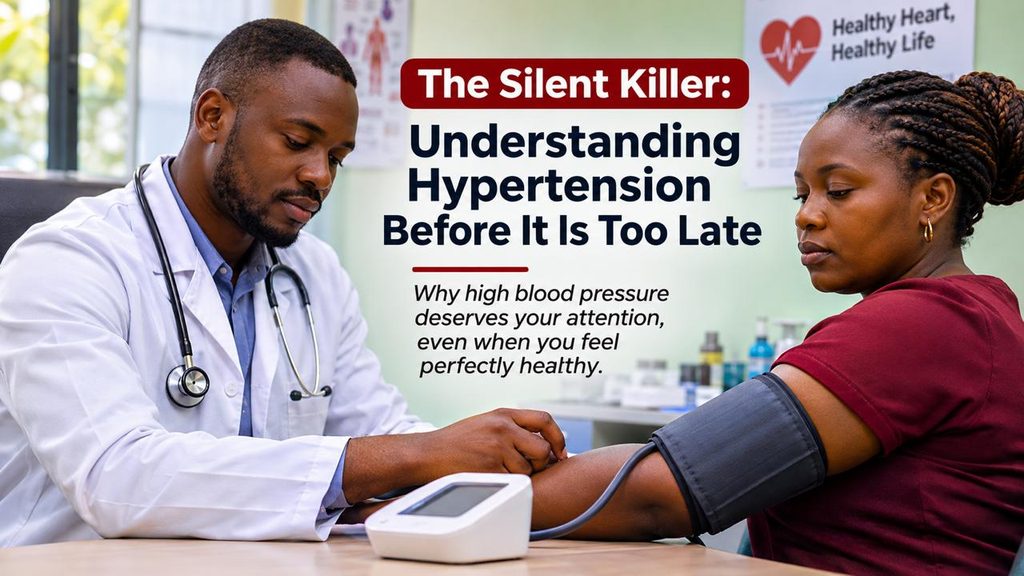
Why high blood pressure deserves your attention, even when you feel perfectly healthy.
By Dr Musa Juma Saro
There is a condition affecting millions of people worldwide that can quietly damage the human body for years without producing any obvious symptoms.
You can wake up feeling perfectly fine, go to work, attend social gatherings, exercise and carry on with your daily activities while this condition gradually damages your blood vessels, heart, kidneys and brain.
That condition is hypertension, commonly known as high blood pressure.
It is often called the silent killer, and for good reason.
What exactly is hypertension?
Blood pressure refers to the force exerted by circulating blood against the walls of blood vessels.
Whenever your heart beats, it pumps blood throughout your body. Blood pressure is recorded using two numbers.
* Systolic pressure: The upper number, representing pressure when the heart contracts.
* Diastolic pressure: The lower number, representing pressure when the heart relaxes between beats.
For most adults, hypertension is defined as a blood pressure reading of 140/90 mmHg or higher, confirmed through appropriate repeated measurements.
For example, a reading of 150/95 mmHg is elevated and requires medical assessment.
The World Health Organization estimates that approximately 1.4 billion adults aged 30–79 years worldwide were living with hypertension in 2024.
Even more concerning, many people living with the condition are unaware that they have it.
Why is hypertension called the silent killer?
One of the most dangerous characteristics of hypertension is that it usually does not produce noticeable symptoms.
A person can have significantly elevated blood pressure and still feel completely normal.
This creates a false sense of security.
Some people only discover that they have hypertension during routine medical examinations. Others are diagnosed after developing complications such as stroke, heart failure or kidney disease.
Headaches, dizziness and fatigue are sometimes associated with high blood pressure, but they are not reliable indicators.
You cannot determine whether your blood pressure is normal simply by assessing how you feel.
The most reliable way to know is to measure it.
What causes high blood pressure?
In many adults, hypertension develops through a combination of genetic, environmental and lifestyle factors.
Some important risk factors include:
1. Excessive salt consumption
Eating too much salt can increase blood pressure, particularly in people who are salt-sensitive.
Processed foods, salty snacks, preserved foods and excessive use of table salt can contribute to high sodium intake.
2. Physical inactivity
A sedentary lifestyle increases the risk of developing hypertension, particularly when associated with weight gain.
3. Excessive alcohol consumption
Regular heavy alcohol consumption can increase blood pressure and contribute to cardiovascular disease.
4. Overweight and obesity
Excess body weight increases the workload on the cardiovascular system and is associated with increased blood pressure.
5. Family history
Having close relatives with hypertension increases your likelihood of developing the condition.
6. Increasing age
The risk of hypertension generally increases as people grow older.
Other contributing conditions include diabetes, chronic kidney disease and certain hormonal disorders.
What happens when hypertension is left untreated?
The human body can tolerate elevated blood pressure for some time, but prolonged exposure causes progressive damage.
The major complications include:
Stroke
High blood pressure damages blood vessels supplying the brain. This increases the risk of both ischaemic and haemorrhagic stroke.
Heart disease
The heart has to work harder to pump blood against increased resistance. Over time, this can cause left ventricular hypertrophy, heart failure and coronary artery disease.
Kidney damage
The kidneys contain delicate blood vessels responsible for filtering waste products from the blood. Persistent hypertension can damage these vessels, eventually leading to chronic kidney disease.
Vision problems
Damage to the small blood vessels supplying the retina can result in hypertensive retinopathy and visual impairment.
These complications are not inevitable. Early detection, appropriate treatment and regular follow-up can significantly reduce the risks.
How can you know whether you have hypertension?
The answer is simple: check your blood pressure.
Blood pressure measurement is quick, painless and widely available in healthcare facilities.
However, proper measurement matters.
For a more reliable reading:
* Avoid smoking, caffeine and exercise for at least 30 minutes before measurement.
* Sit quietly for approximately five minutes.
* Keep your back supported and feet flat on the floor.
* Use an appropriately sized cuff.
* Support your arm at heart level.
* Take repeated measurements as recommended by your healthcare professional.
A single elevated reading does not automatically establish a diagnosis of chronic hypertension.
Your healthcare provider may recommend repeated clinic measurements or home/ambulatory blood pressure monitoring to confirm the diagnosis.
Do not ignore repeated elevated readings.
Can hypertension be prevented?
Yes. Although some risk factors cannot be changed, several lifestyle modifications can reduce the risk of developing hypertension and help control existing disease.
Here are practical measures worth adopting:
Eat a balanced diet.
Increase your intake of vegetables, fruits, whole grains and other nutritious foods.
Reduce excessive salt consumption. WHO recommends limiting sodium intake to less than 2,000 mg per day, equivalent to less than 5 grams of salt.
Exercise regularly.
Aim for at least 150 minutes of moderate-intensity physical activity every week.
Walking, cycling, swimming and other aerobic activities can improve cardiovascular health.
Maintain a healthy weight.
If you are overweight, gradual and sustainable weight reduction can help lower blood pressure.
Limit alcohol consumption.
Reducing alcohol intake can improve blood pressure control.
Avoid tobacco.
Smoking damages blood vessels and increases cardiovascular risk.
Attend regular medical check-ups.
Do not wait until you become unwell to visit a healthcare facility.
Is hypertension treatable?
Absolutely.
Hypertension is a manageable chronic condition.
Treatment involves lifestyle modification and, when indicated, antihypertensive medication.
Common classes of medication include:
* Calcium channel blockers, such as amlodipine.
* ACE inhibitors, such as enalapril.
* Angiotensin receptor blockers, such as losartan.
* Thiazide and thiazide-like diuretics.
The choice of medication depends on individual patient characteristics, associated medical conditions, kidney function and other clinical considerations.
Some patients require more than one medication to achieve adequate blood pressure control.
One important message deserves emphasis: If you are prescribed antihypertensive medication, do not stop taking it simply because your blood pressure has returned to normal.
Normal readings may actually indicate that your treatment is working.
Always discuss medication adjustments with your healthcare provider.
When should you seek urgent medical attention?
Very high blood pressure, particularly readings around 180/120 mmHg or higher, requires prompt medical assessment.
When accompanied by chest pain, severe headache, difficulty breathing, confusion, sudden weakness, difficulty speaking or visual disturbances, it may indicate an acute medical emergency.
Seek emergency medical care immediately.
Do not attempt to manage such symptoms at home.
A message worth remembering
Hypertension does not discriminate.
It affects people across different ages, professions, income groups and backgrounds.
You could be a teacher, businessperson, farmer, healthcare worker or university student. Your occupation does not protect you from developing high blood pressure.
The greatest mistake is assuming that feeling healthy means being healthy.
Sometimes, the most important medical intervention is not treating a disease after it has caused damage. It is identifying that disease before complications develop.
A blood pressure check takes only a few minutes.
Those few minutes could make a significant difference to your future health.
Do not wait for a stroke, heart attack or kidney disease to discover that you have hypertension. Check your blood pressure today.
⸻
About the author
Dr Musa Juma Saro is a medical doctor with an interest in clinical medicine, public health and health education. Through this journal, he seeks to make medical knowledge accessible, practical and relevant to everyday life.
Medical disclaimer: This article is intended for general health education. It does not replace individual medical assessment, diagnosis or treatment.
References
1. World Health Organization. Hypertension Fact Sheet. Updated 25 September 2025. https://www.who.int/news-room/fact-sheets/detail/hypertension
2. Ministry of Health, Kenya. Kenya National Guidelines for the Management of Cardiovascular Diseases, 2024. https://guidelines.kenyacardiacsociety.org/